


Intimacy
Coordination
Methodology
My intimacy coordination practice is grounded in the Chelsea Pace methodology of staging intimacy, which treats intimacy as choreography: specific, repeatable, and carefully crafted. Central to this approach is the use of desexualised, gender‑neutral language for all parts of the body and all actions. This reduces ambiguity, limits assumptions, and creates a shared vocabulary that supports clarity, consent, and consistency.
Intimacy coordination exists to protect performers, support directors, and strengthen the work itself. By establishing clear processes for consent, boundary‑setting, and ongoing check‑ins, intimacy choreography allows intimate, sexual, or violent material to be staged with precision rather than pressure. This ensures that scenes remain safe, repeatable, and adaptable across a rehearsal period and a performance season.
Who Am I
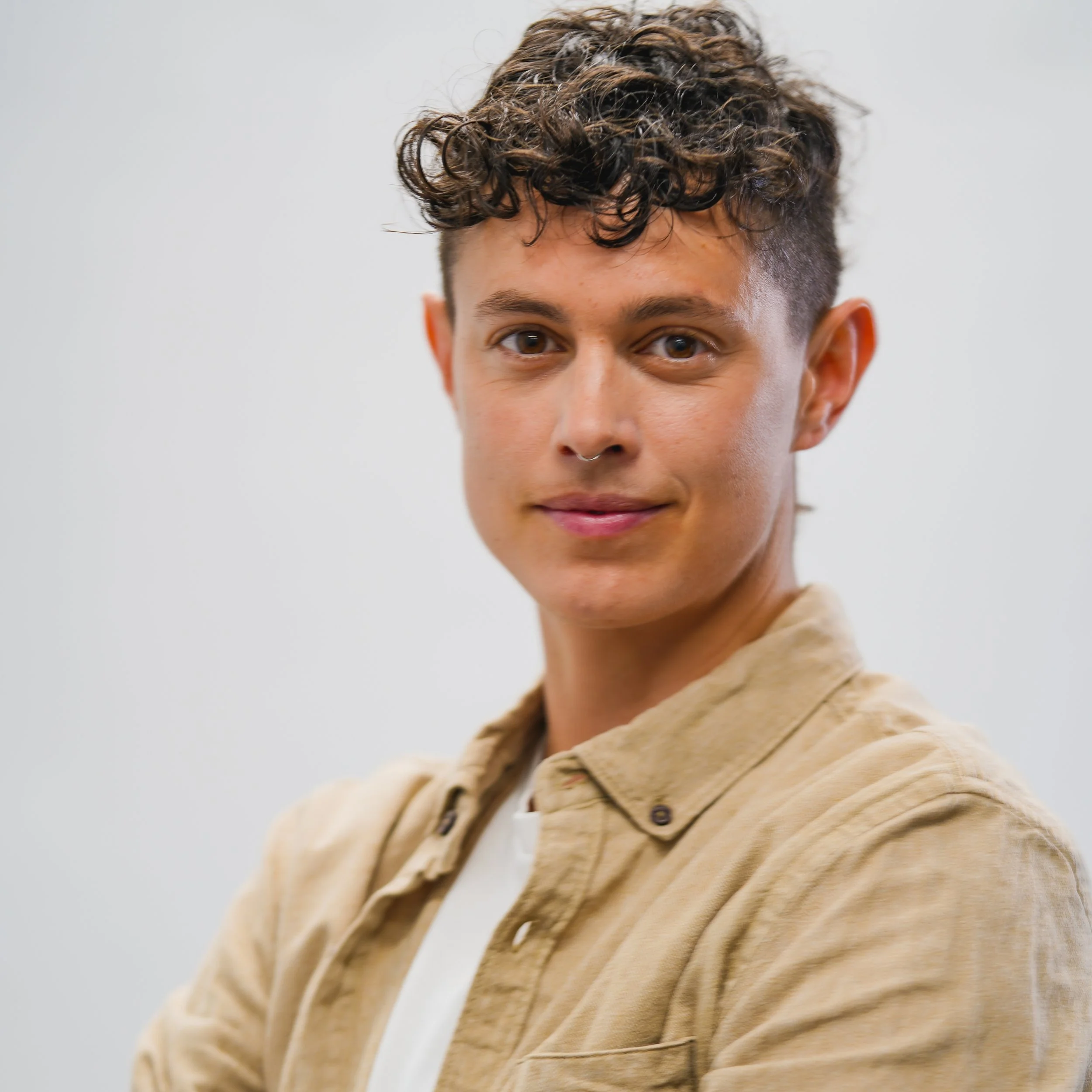
Cohan
Pronouns: they/them
I am a white, middle‑class, queer, trans non‑binary artist from Boorloo (Perth), working across so‑called Australia. I come to intimacy coordination through my long‑term practice as a theatre director, independent producer, and performer. This gives me a practical understanding of rehearsal rooms, production timelines, budget constraints, and the complex needs of performers and creative teams.
Across my career, my own work has frequently engaged with themes of abuse, coercion, and violence alongside consensual intimacy, kink, and sex‑positive narratives. I believe there is always a way to realise a director’s vision and deliver the intended impact for an audience while ensuring performers are supported, informed about their boundaries, and equipped with the skills to adjust choreography mid‑season if required.
Workshops
All productions I work with begin with a foundational workshop. This session supports performers and creatives to:
recognise and articulate personal boundaries
identify when boundaries shift
communicate changes clearly and consensually
introduce touch into the rehearsal room in a non‑sexualised, structured way
This workshop typically runs for approximately two hours.
From there, the process of building intimacy choreography draws on my wider experience in movement, language, and dramaturgy. Scenes are constructed by layering simple moments of touch into clearly defined, repeatable actions that support the dramatic stakes of the work.
I also offer extended workshops for individuals or groups who want to learn the broader language and choreographic tools of intimacy practice. These sessions provide practical skills for safely staging intimate scenes when a dedicated intimacy coordinator is not possible. It is both my philosophy, and Chelsea Pace’s, that some education and intentional practice is always better than none.
Accreditation
I am not formally accredited as an intimacy coordinator. My practice has been developed over years of research, training, and direct application in rehearsal rooms.
I am actively pursuing formal accreditation. This is a relatively new industry, and while many courses exist, not all offer the same depth or rigour. The training pathway I am working toward is based in Canada and includes multiple prerequisite trainings with different community groups. Balancing this process alongside my own artistic practice means accreditation is likely to take some years.
Relevant qualifications and checks:
Master of Directing (Theatre), with a focus on community practice and queer embodiment
Current Victorian Working With Children Check
National Police Check (issued November 2025)
Inclusive Practice and Communities
At the core of my work is supporting each person to identify and communicate their own needs, and ensuring those needs are respected within the rehearsal space.
Disabled and Chronically Ill Communities
I do not have specific formal training in disability‑led intimacy practice. However, I have long‑term professional and personal relationships with people who identify as disabled and/or chronically ill.
My practice is informed by a social model of disability: I understand disabling experiences to be created by structural inequality, lack of access, and inadequate resourcing rather than by bodies themselves. Within my capacity, I work to increase access through clear communication and flexible processes. This can include adjusted timelines, scheduled breaks, lighting and sound considerations, alternative reference materials, and the use of specific or preferred language to discuss the body.
Deaf Communities
I recognise that many Deaf people consider deafness as a linguistic and cultural identity.
I do not speak Auslan beyond a few basic words. I require an interpreter to work with Deaf artists and am comfortable integrating interpreters into intimacy coordination processes.
Diverse Language Groups
I work in English and would require an interpreter to collaborate with artists who do not speak English. I am experienced in choreographing intimacy for scripts and libretto’s written in other languages when a translation is provided.
Neuro divergent Communities
While I do not hold formal accreditation in neuro divergent‑specific practice, I have extensive experience through both my professional career and personal relationships with neuro divergent people.
I identify as having undiagnosed hyper‑focus ADHD. I understand ADHD and autism as natural variations in human cognition. I also have ongoing personal relationships with people who experience psychosis and am comfortable holding space for multiple, simultaneous realities and ways of understanding the world.
My approach prioritises clarity, structure, consent, and adaptability—elements that often support neuro divergent artists to work safely and confidently.
Aboriginal and Torres Strait Islander Peoples and Cultural Content
I do not hold specific accreditation in First Nations cultural practice. Through my Master’s research, I undertook focused learning around protocols for engaging with First Nations cultural material. While core intimacy coordination practices remain consistent working with First Nations artists, additional cultural awareness and protocols may be appropriate. I acknowledge that wherever I live and work across so‑called Australia, I do so on unceded, stolen lands. I incorporate an Acknowledgement of Country in my first session with all groups unless a full Acknowledgement or Welcome has already been led, in which case I align with that offering. I am happy to lead all sessions with an Acknowledgement of Country.
I recognise that First Nations artists are often placed in the position of unpaid cultural educators. Ideally, I work alongside a cultural consultant to avoid placing this labour onto performers. I understand that independent theatre contexts often lack the resources to engage both a cultural consultant and an intimacy coordinator. If you are an Aboriginal or Torres Strait Islander artist I am open to discussing ways to support your project vision in the absence of a cultural consultant. If you are a non‑Aboriginal or Torres Strait Islander artist working with First Nations cultural content, I require evidence of permission from appropriate Elders and a commitment to working with a cultural consultant where relevant.
Queer and Trans Communities
I am a member of the queer community and identify as trans and non‑binary. I will always ask for and use self‑identified pronouns and am also comfortable using names only if preferred.
I understand that performing intimacy can be complex when the material does not align with a performer’s sexuality, gender identity, bodily experience, or moral framework. I approach these situations professionally by focusing on boundaries, consent, and the dramaturgical function of a moment, giving performers a stable and grounded way into the work.
Older Generations
I recognise that the word queer can carry traumatic or painful associations for some LGBT elders. While I use this word to describe myself, I respect and support others in using the language that feels safest and most accurate for them.
I am happy to adapt timelines, language, levels of choreographic detail, and communication styles to meet the needs of older performers or intergenerational teams.
Working with Children
When working with children and young people, my practice prioritises clarity, consent, age-appropriate language, and the minimisation of risk. Intimacy coordination in these contexts is not about staging sexualised material, but about ensuring that any physical interaction, proximity, or emotionally sensitive content is approached with care, transparency, and strong boundaries.
I work closely with directors, guardians, educators, and production teams to ensure expectations are clear and that young performers understand what is being asked of them in ways that are appropriate to their age and development. I use desexualised, neutral language and clear choreography, and I actively avoid improvisational approaches that place responsibility or pressure onto the child performer.
I hold a current Victorian Working With Children Check.
Rates
Rates are negotiated on a project‑by‑project basis
I take into account the scale of the production, available resources, and the scope of work required.
Please contact me via the form below to discuss your project.